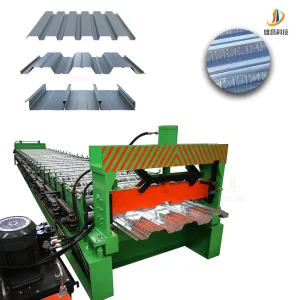
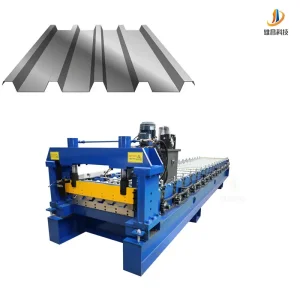
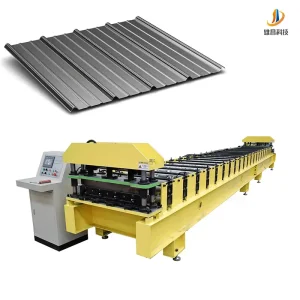
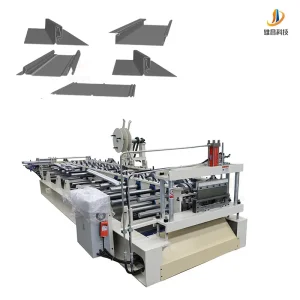
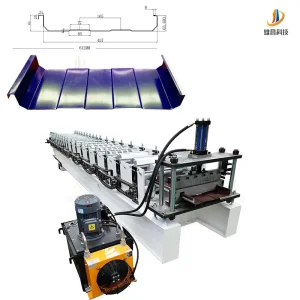
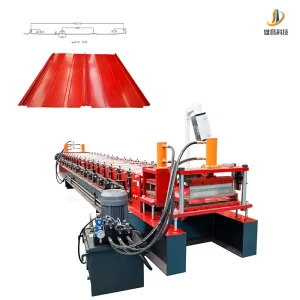
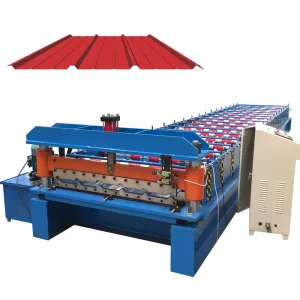
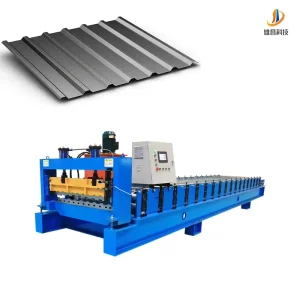
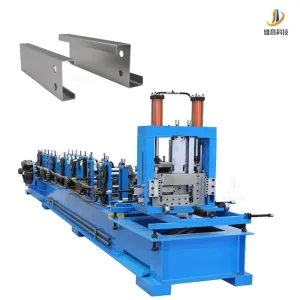
Precision-engineered profiling systems customized to match India's rigorous civil infrastructure and multi-story structural standards.
The skyline of modern India is undergoing a massive structural shift. Driven by initiatives like the Smart Cities Mission, industrial corridor construction, and the rapid expansion of technology parks in cities like Bengaluru, Hyderabad, Pune, and Mumbai, traditional construction methodologies are being replaced. The primary transition is from cast-in-situ concrete frame structures to composite steel frame construction. At the core of this engineering transition is the high-strength steel floor deck.
Indian seismic zones (ranging from Zone II to Zone V) demand lightweight yet extremely rigid structural designs. Floor deck sheets act as tensile reinforcement for composite concrete slabs. They serve a dual purpose: first, as a safe working platform during construction; second, as permanent formwork that bonds with concrete to form a composite floor system. To achieve this, the metal decking sheet requires high-precision profiles and deep mechanical embossments that are uniform throughout the length. The consistency of these profiles is heavily dependent on the mechanical stiffness and roll forming path layout of the manufacturing equipment.
In India, top tier real estate and infrastructure companies like L&T, Tata Projects, JSW, and Godrej Properties are shifting their procurement standards towards international benchmarks (such as Eurocode 4 and ANSI/SDI-C1.0). Historically, regional roll formers in places like Chennai, Ahmedabad, and NCR fabricated basic corrugated systems. However, with modern project specifications requiring floor deck profiles (like the TR60+ and TR80+ equivalents or 51mm/75mm depth profiles) to handle heavy live loads of warehouse distributions, local sourcing teams face challenges with local fabricators whose machines exhibit springback issues and roller wear when processing high-strength structural grade steels (YS 350 to YS 550 MPa).
This dynamic has created a significant demand for advanced industrial-grade floor deck roll forming machines capable of continuous high-speed production without structural deviation in profile geometry. Leading manufacturers must ensure that their machinery can consistently run hot-dip galvanized steel sheets with high-yield strength, without damaging the zinc coating during the forming passes.
As structural specifications become increasingly complex, procurement teams must look closely at their machinery supply chain. Under the Industry 4.0 blueprint, XC (XiongChang) Metal Forming has developed an integrated, digitally-monitored manufacturing process at our 50,000 m² production facility. Unlike local assembly workshops in India that rely on third-party casting and manual machining, XC produces all core mechanical components in-house using heavy-duty CNC machining centers.
This systematic rigor guarantees that whether processing a 0.8mm lightweight partition profile or a 1.2mm structural concrete slab deck, the profile thickness variation is controlled within fractions of a millimeter, protecting the structural integrity of the final building envelope.
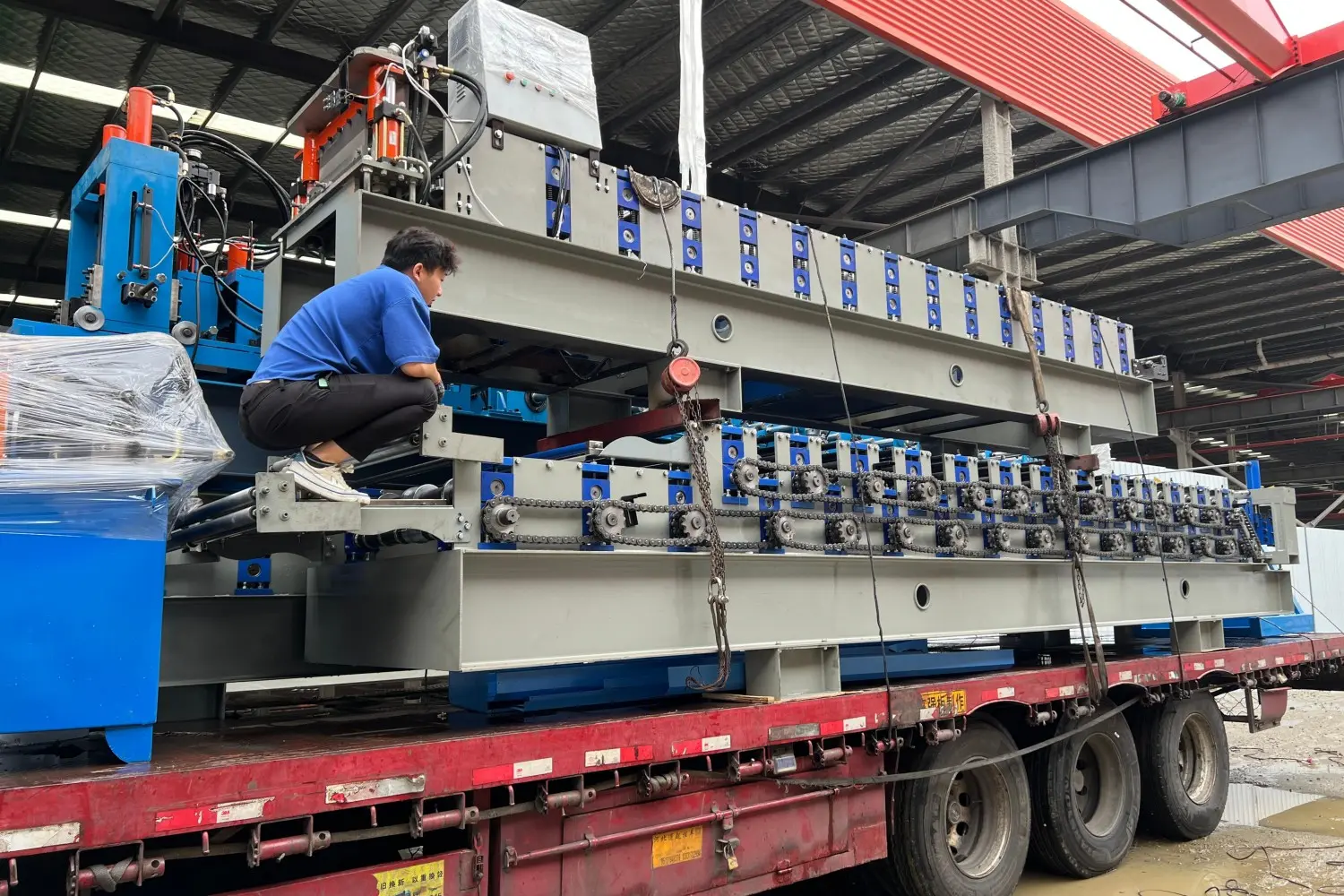
In global EPC (Engineering, Procurement, and Construction) operations, sourcing machinery requires careful consideration of local standards. For instance, projects in India often feature different profile pitch standards compared to projects in Europe or the Middle East. While European configurations focus heavily on optimization of spans to reduce steel beam count, Indian projects frequently utilize composite decking optimized for concrete volume reduction. Standard profiles include the 51/262 (2" deep) and 75/305 (3" deep) configurations.
A major design hurdle is the handling of **high-tensile steel** raw materials. Coils supplied by major Indian mills like JSW Steel or Tata Steel have variable mechanical tolerances. High tensile properties (YS 550 MPa) can lead to significant springback, meaning the steel will attempt to return to its flat state after passing through the rollers. XC roll formers resolve this issue by integrating advanced overbending stations and post-forming straightening units, ensuring that the profile dimensions strictly match the design drafts without stressing the metal fibers.
| Feature Spec | XC Smart Series (Industry 4.0) | Standard Local Indian Fabrications |
|---|---|---|
| Roller Processing | GCr15/Cr12MoV vacuum heat treatment, hard chrome plated | Medium carbon steel (45#), local heat treatment, thin plating |
| Forming Speed | 15 - 25 meters per minute (Continuous High Speed) | 8 - 12 meters per minute (Frequent Stop-to-Cut cycles) |
| Springback Control | Integrated overforming rollers & adjustable straightening stations | Fixed geometric rollers, requiring constant manual adjustment |
| PLC System | Siemens S7-1200 / Mitsubishi FX5U (Remote Support Ready) | Basic domestic PLC, lacks remote network diagnostics |
| Embossing Quality | Hardened dual-roller embossing system, depth 1.0-1.5mm uniform | Single-pass embossing rolls, shallow depth under pressure drop |
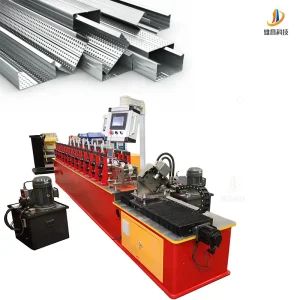
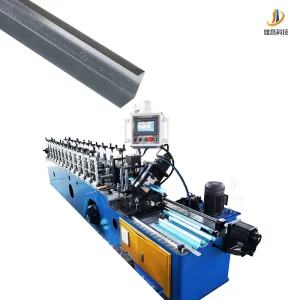
Beyond decking, XC's expertise spans the entire structural profile segment, enabling building envelope manufacturers to supply complete structural packages. Our C/Z interchangeable purlin machines and Light Gauge Steel (LGS) framing systems are engineered to integrate seamlessly into a factory's workflow, permitting rapid adjustment of web and flange sizes using electric or hydraulic automation systems. This flexibility is critical for manufacturers who need to quickly switch production profiles depending on the structural layout of localized multi-story residential and commercial complexes.
Addressing the critical operational, logistical, and technical queries of global procurement teams and structural engineers.
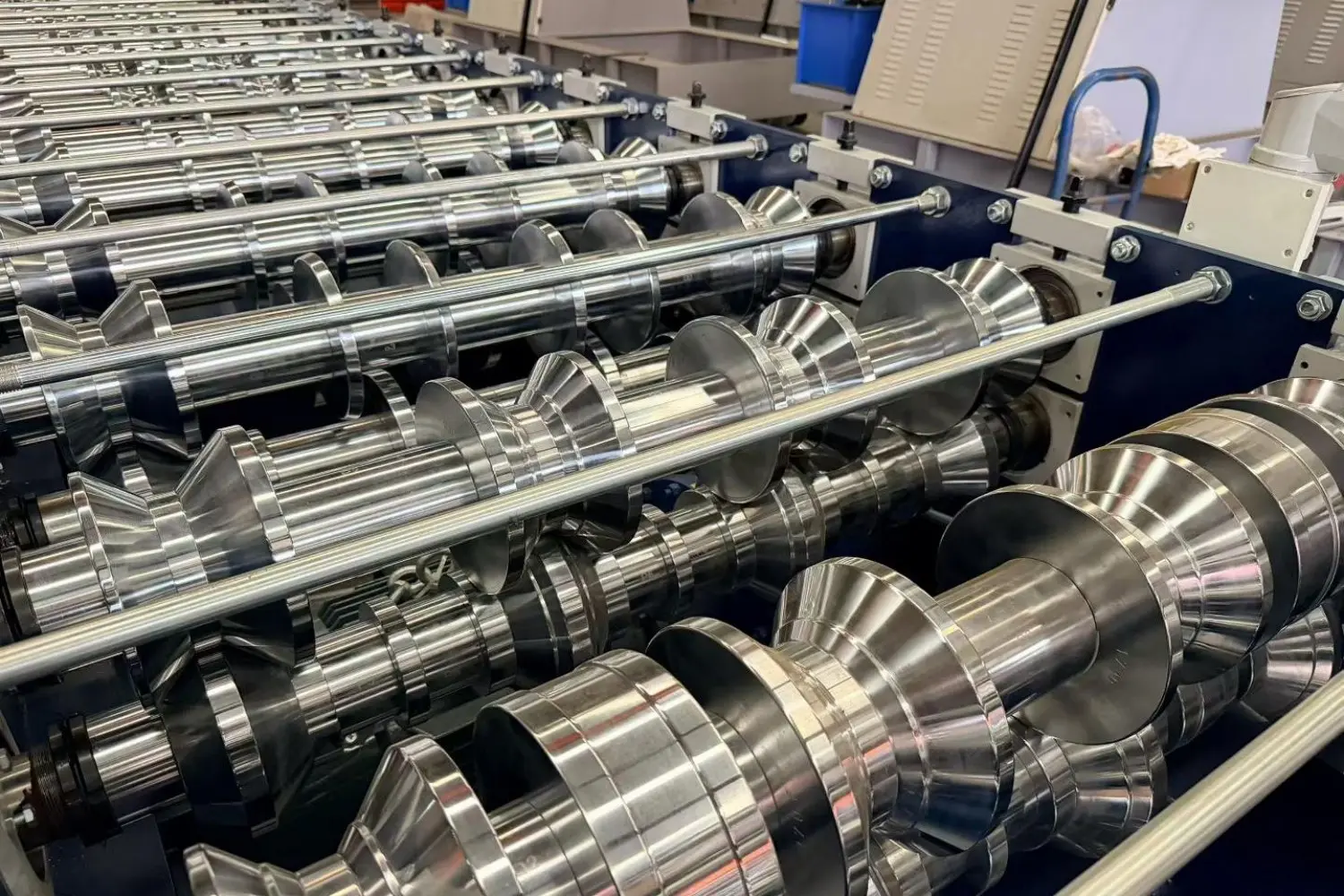
Over two decades of dedication to cold roll forming systems have allowed XC (XiongChang) to refine our engineering processes. Our systems are built around heavy-duty manufacturing and rigorous quality control protocols.
From design verification via advanced engineering software to dynamic runout tests of all spindle shafts, our QA workflows ensure that every machine leaving the factory delivers consistent precision. We operate a complete array of diagnostic and verification instruments to check material thickness resilience, shearing clean-cut parameters, and hydraulic operational temperatures before shipping.
Explore our deep-draw roll forming machines, standing seam roof shapers, and lightweight framing production systems.
Contact our sales and engineering team today to receive a complete quotation, CAD layouts, and custom profiling solutions customized for your target Indian or global civil project requirements.
Send Inquiry Now Xiongchang