Why Choose the Roll Forming Process? The answer begins with scale, consistency, and material efficiency. World Steel Association’s World Steel in Figures 2024 reports global crude steel production of approximately 1.89 billion tonnes in 2023. Much of that steel becomes profiles, frames, rails, panels, and structural components. Roll forming converts coiled sheet into these shapes through continuous bending. The strip passes through multiple roller stations, gradually reaching its final geometry. Picture a steel coil entering one side of a line and leaving as a precise channel, standing seam, or tube-ready section.
The process can support high-volume production with repeatable dimensions and reduced manual handling. AISI design guidance and ASTM standards help engineers evaluate steel grades, tolerances, and performance requirements. Industry experience also shows that proper entry guidance, lubrication, and roller alignment matter greatly. A small setup error can create twist, edge wave, or uneven cut lengths. Details matter.
Roll Forming Process selection becomes especially practical when the profile remains consistent across long production runs. It can reduce secondary welding, improve throughput, and use thinner materials without sacrificing intended performance. However, it is not automatically the best option. Tooling investment can be significant, and frequent profile changes may weaken the business case. Short production runs may favor press braking or other methods. That limitation deserves attention. A reliable decision should compare annual volume, profile complexity, material strength, tolerances, changeover time, and total lifecycle cost. Reports from the International Energy Agency also emphasize manufacturing efficiency and material productivity as important routes toward industrial emissions reduction. The process is powerful, but only when engineering judgment supports it.
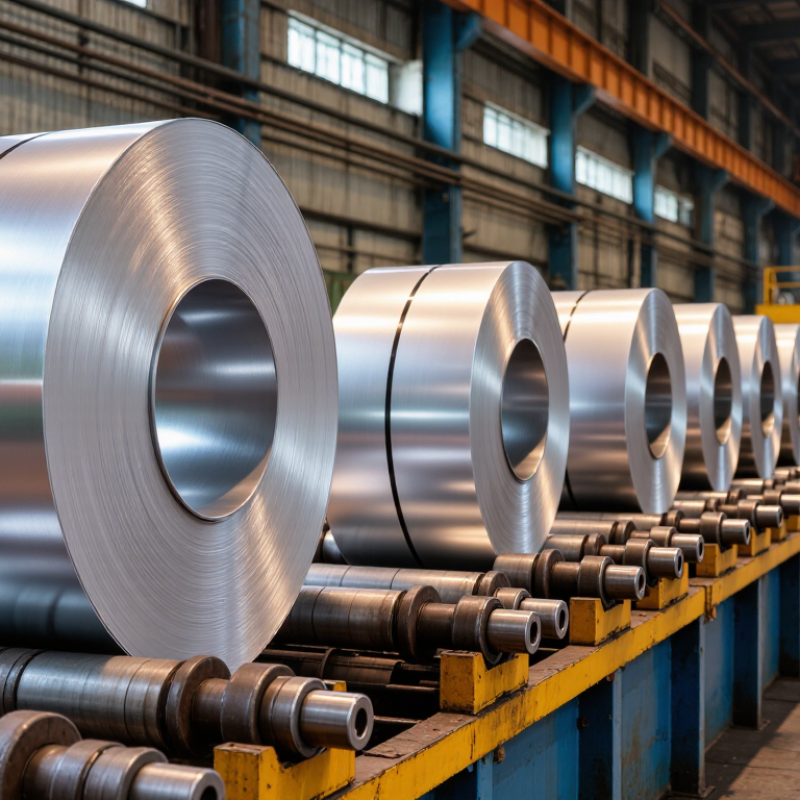
Why Choose the Roll Forming Process?
Roll forming is a continuous metal-shaping method. A flat coil passes through paired rollers, called stands. Each stand bends the strip slightly. The final station creates the required cross-section. Cutting usually happens after forming, without stopping the line. This differs from press braking, which shapes separate blanks one bend at a time.
The process suits long, consistent profiles such as panels, channels, rails, and framing members. The 2024 World Steel in Figures report recorded about 1.89 billion tonnes of crude steel production in 2023. That huge material flow makes efficient forming increasingly important. Roll forming can reduce repeated handling and maintain stable dimensions. However, it does not automatically reduce waste. Poor coil quality, incorrect tooling, or an unstable pass schedule can create long lengths of scrap.
Engineers normally review material grade, thickness, bend radius, profile complexity, and required volume before selecting the process. Cold-Formed Steel Design Manual guidance emphasizes checking local buckling and connection behavior, not only outside dimensions. UNEP’s 2024 Global Status Report for Buildings and Construction identifies buildings and construction as major users of global energy and contributors to emissions. Lighter, accurately formed sections may support material efficiency, but the claim needs project-level verification. It is not magic.
On the shop floor, operators inspect edge wave, twist, surface marks, and cut length. Small setup errors can travel through hundreds of meters of product. Roll forming works best when design, tooling, testing, and inspection remain connected. Sometimes another method is better. That honest comparison matters.
Roll forming begins with a carefully selected metal coil. Operators check its thickness, width, surface condition, and yield strength before production. Small variations can affect the final profile. The coil enters a decoiler, which unwinds the strip at a controlled speed. Guiding equipment centers the material before it reaches the forming section. This alignment matters. A misaligned strip may create twisted edges or uneven holes. Some lines use a leveler to remove coil memory and flatten the metal. The preparation stage often looks simple, but it prevents many downstream problems.
The strip then passes through multiple roller stations, each making a small change to its shape. Early stations create gentle bends, while later stations produce sharper angles and final dimensions. Rollers must apply pressure gradually. Excessive forming in one station can cause cracks, scratches, or springback. Cutting equipment separates each finished length, either before or after forming, depending on the design. Sensors and gauges monitor speed, length, and profile accuracy during production. Experienced technicians inspect the first pieces and compare them with approved drawings. They may adjust roller spacing, guides, or cutting timing. In practice, the sequence is not always perfect. Material behavior can change between coils, so a setting that worked yesterday may need careful correction today. Clean rollers, calibrated instruments, and documented inspections improve reliability. Tensile testing and dimensional checks can provide additional confidence when the application demands tight tolerances.
Roll forming works best with metals that bend continuously without cracking or losing shape. Galvanized and carbon steel are common choices for framing, roofing panels, rails, and cable trays. Their strength supports long profiles with stable dimensions. Stainless steel suits corrosion-sensitive areas, although its higher strength can demand slower forming and stronger tooling. Aluminum offers low weight and good corrosion resistance. It may need careful control because it can mark easily. Consistency matters.
Material thickness, yield strength, surface finish, and coil quality all affect production results. Pre-painted sheets require clean guides and controlled pressure to protect the coating. A small scratch can become a costly visual defect. Not every grade works. I have seen a promising design fail because the strip was too hard for its tight bends. Testing a short coil section before full production can prevent that mistake.
Roll forming suits profiles with a constant cross-section along their length. C-channels, Z-purlins, angles, U-channels, door tracks, and structural studs are practical examples. Repeated bends distribute forming gradually across several stations. Sharp corners, deep offsets, and narrow return lips need extra attention. They can cause twisting, springback, or tool interference. Designers should check bend radii, tolerances, hole placement, and cut-off requirements together. A profile may look simple. It is not. In practice, slight design changes often improve feeding stability more than adding complicated tooling.
Roll forming offers continuous production, consistent dimensions, and efficient material use. A coil moves through paired rollers, gradually becoming a finished profile. Production speeds often reach 10–100 metres per minute, depending on thickness, profile complexity, and tooling. That pace can reduce handling between operations.
Material efficiency is another important benefit. Unlike machining, roll forming removes very little metal. Cut-off waste remains, but the main profile is shaped rather than carved. This matters in a steel-intensive economy. The World Steel Association reported approximately 1.89 billion tonnes of crude steel production in 2023. Even small reductions in scrap can therefore influence purchasing, energy use, and transport. The International Energy Agency also estimates that iron and steel production creates about 7–9% of global energy-related carbon dioxide emissions. Efficient forming cannot solve that problem alone. It can help.
Consistency is practical, not abstract. Properly aligned tooling can hold repeatable widths, angles, and hole locations across long production runs. Inline punching and cutting may reduce secondary handling. Still, roll forming is not magic. Tooling costs can be high, and design changes may become expensive after production begins. Short runs may favour another process. Tight shapes can also expose springback and alignment problems.
Good results depend on engineering discipline. Test the material first. Review tolerances honestly. Allow room for maintenance, because worn rollers quietly damage quality. These details are easy to overlook. That is where savings disappear.
Why Choose the Roll Forming Process?
Where Is Roll Forming Commonly Used?
Roll forming is commonly used when factories need long, uniform metal profiles. Steel or aluminum strip passes through shaped rollers, gradually forming the required section. This controlled movement reduces sudden stress and supports repeatable dimensions across thousands of pieces.
The construction sector uses roll forming for roofing panels, wall studs, ceiling channels, door frames, and structural rails. On a building site, a profile may run several meters while keeping a clean edge and stable shape. In warehouses, roll formed sections create shelving beams, framing members, and protective barriers. Solar mounting rails also benefit from lightweight profiles with accurately positioned holes.
The process appears in transportation and equipment manufacturing too. Vehicle body reinforcements, seat tracks, trailer components, and appliance panels often require continuous sections. Inline punching can create fixing holes before cutting, reducing separate operations. That sounds efficient, and often it is.
But roll forming is not perfect. Short production runs may not justify dedicated tooling costs. Highly complex shapes can also require secondary bending or welding. Engineers should test springback, coating behavior, and cut-end quality before approving a design. A small change in material thickness can affect the whole line. Careful trials matter.
| Common Application | Typical Roll-Formed Products | Common Materials | Typical Material Thickness | Why Roll Forming Is Suitable | Common Profile Characteristics |
|---|---|---|---|---|---|
| Building and Construction | Roofing panels, wall panels, purlins, girts, studs, tracks, door frames and trim sections | Galvanized steel Pre-painted steel Aluminum | Approximately 0.40–3.00 mm, depending on the structural requirement | Produces long, consistent sections with repeatable dimensions and efficient material utilization | Continuous channels, C-sections, Z-sections, hat sections, corrugated profiles and interlocking edges |
| Automotive and Transportation | Roof rails, door reinforcement members, seat tracks, bumper components, chassis sections and cargo-vehicle rails | High-strength steel Mild steel Aluminum | Approximately 0.70–4.00 mm, subject to strength and forming requirements | Supports high-volume production of lightweight, strong sections with integrated bends and stiffening features | Closed or partially closed sections, reinforcing ribs, beads, flanges and accurately controlled bends |
| Storage and Material Handling | Warehouse uprights, beams, shelf supports, pallet-rack components, guardrails and conveyor frames | Structural steel Galvanized steel | Approximately 1.50–4.00 mm for many structural components | Delivers high repeatability for modular components and allows stiffening ribs to be formed without separate fabrication steps | Perforated uprights, roll-formed beams, C-sections, box-like profiles and reinforced flanges |
| Solar Mounting Systems | Panel rails, support channels, roof hooks, purlins and ground-mount structural members | Galvanized steel Aluminum Stainless steel | Approximately 1.00–3.00 mm for many rails and channels | Creates lightweight profiles with mounting slots, lips and fastening features in a continuous process | Slotted channels, hat sections, L-sections, U-sections and profiles with formed fastening flanges |
| HVAC and Air Distribution | Duct reinforcement sections, flange profiles, corner frames, support channels and ceiling-system components | Galvanized steel Stainless steel Aluminum | Approximately 0.50–2.00 mm for many duct and framing applications | Forms straight, uniform sections suitable for long duct runs and helps reduce secondary joining operations | Flanged edges, connector profiles, reinforcement beads, channels and corner sections |
| Electrical and Cable Management | Cable trays, conduit supports, electrical enclosures, mounting rails and equipment channels | Galvanized steel Stainless steel Aluminum | Approximately 0.80–3.00 mm for common support and enclosure profiles | Provides accurate, repeatable profiles with formed edges that improve stiffness and installation compatibility | Perforated channels, U-sections, box sections, folded flanges and snap-fit edges |
| Appliances and Furniture | Cabinet frames, appliance panels, drawer slides, shelving rails, furniture tracks and support members | Cold-rolled steel Pre-painted steel Stainless steel | Approximately 0.50–2.50 mm for many frame and trim components | Produces clean, repeatable shapes at high volume while reducing cutting, bending and welding requirements | Decorative trims, narrow channels, symmetrical sections, hemmed edges and stiffened panels |
| Railway and Public Infrastructure | Station framing, cable supports, interior trim, rail-car panels and structural support sections | Carbon steel Stainless steel Aluminum | Approximately 1.00–5.00 mm, depending on structural and safety requirements | Suitable for long components requiring consistent geometry, controlled tolerances and corrosion-resistant finishes | Large channels, hat sections, formed panels, reinforcement profiles and complex multi-bend sections |
| Agricultural Equipment | Greenhouse channels, livestock-panel frames, machine guards, trailer rails and equipment supports | Galvanized steel Carbon steel Aluminum | Approximately 0.80–4.00 mm for many equipment and framing parts | Combines continuous production with durable profiles that can include holes, slots and stiffening features | Channels, rails, arches, formed tubes, slotted profiles and reinforced structural sections |
| General Industrial Components | Machine guards, conveyor rails, protective covers, brackets, structural frames and custom channels | Carbon steel Stainless steel Aluminum | Approximately 0.50–6.00 mm, depending on profile complexity and material grade | Offers flexible profile design, high dimensional consistency and efficient production of long or repeated parts | Open sections, closed sections, asymmetrical profiles, ribbed sections and profiles with punched features |
Note: Thickness ranges are typical reference values rather than fixed limits. Actual capability depends on material grade, yield strength, profile geometry, tooling design, line configuration and required tolerances.
Roll forming shapes a continuous metal strip through several paired roller stations. Each station makes a small bend until the final profile appears.
Operators inspect the coil’s thickness, width, surface, and yield strength. A decoiler unwinds it steadily. Guides center the strip before forming begins.
Poor alignment can create twisted edges, uneven holes, or unstable dimensions. A leveler may flatten the strip and reduce coil memory. Small errors matter.
Early rollers make gentle bends, while later stations form sharper angles. Pressure must increase gradually to reduce cracks, scratches, and springback.
Production may reach 10–100 metres per minute, depending on thickness and profile complexity. Heavier material or complex shapes usually reduce speed.
Sensors monitor speed, length, and profile accuracy during production. Technicians inspect initial pieces against approved drawings. They may adjust guides, roller spacing, or cutting timing.
Roll forming supports continuous production, repeatable dimensions, and efficient material use. It removes little metal compared with machining. That can reduce scrap.
Common applications include roofing panels, wall studs, ceiling channels, door frames, and structural rails. It also produces shelving beams, solar rails, seat tracks, and trailer components.
No. Dedicated tooling can be expensive, especially for short production runs. Complex profiles may need additional bending or welding. I would not assume one setting always works. Different coils can behave differently.
The Roll Forming Process is a continuous manufacturing method that shapes long metal strips into precise profiles by passing them through a series of carefully arranged rollers. Unlike processes that form the entire piece at once, roll forming gradually bends the material, helping maintain consistent dimensions, smooth surfaces, and reliable structural performance. The process typically includes material feeding, leveling, progressive forming, optional punching or cutting, and final inspection.
Roll forming is well suited to materials such as steel, stainless steel, aluminum, and other ductile metals. It can produce profiles ranging from simple channels and angles to complex sections used in construction, transportation, storage systems, electrical equipment, and industrial components. Key benefits include high production efficiency, reduced material waste, repeatable quality, and the ability to integrate additional operations into one production line. Its flexibility and cost effectiveness make it a practical choice for producing long, uniform metal components at scale.

Xiongchang