Choosing the right forming equipment can shape an entire purlin production line. A Purlin Bearing Rib Roll Former is designed to create accurate bearing ribs while maintaining consistent profiles across repeated batches. This matters when steel sections must fit tightly during assembly. Small dimensional errors can become visible gaps, uneven loads, or delayed installation.
In practical workshops, operators often judge a machine by more than its advertised speed. They inspect the entry guide, forming stations, cutting system, control interface, and frame stability. A reliable Purlin Bearing Rib Roll Former should handle specified coil widths and thicknesses without excessive adjustment. It should also support repeatable setup, clear maintenance access, and documented quality checks. Trial forming is valuable. It reveals problems that brochures rarely mention.
The best choice depends on the product range, material grade, production volume, and available floor space. A machine built for heavy-gauge steel may be unsuitable for a smaller operation. That point is sometimes overlooked. Buyers should compare drawings, sample profiles, tolerance records, safety features, and after-sales support before committing. Experienced manufacturers can explain how roll spacing, drive design, and calibration affect the finished rib. Independent verification still matters. No machine removes every production risk, and even a strong specification may need revision after real testing. This guide examines why the Purlin Bearing Rib Roll Former remains a practical option for manufacturers seeking stable quality, efficient changeovers, and dependable long-term operation.
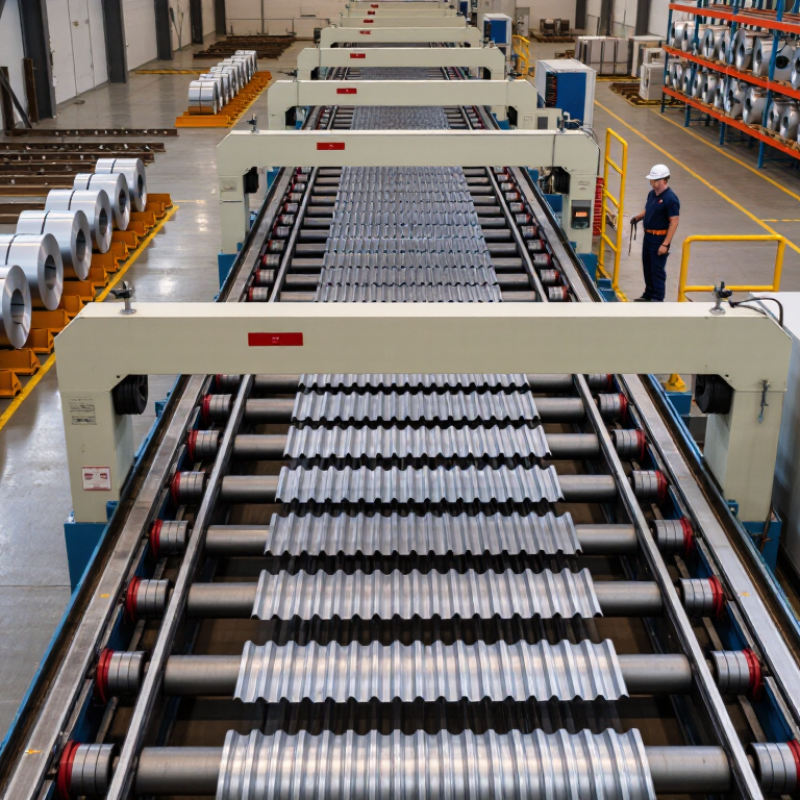
A purlin bearing rib roll former is an industrial machine that produces ribbed metal panels for roof and wall systems. It feeds a steel coil through paired forming rollers. Each station gradually bends the sheet into a controlled profile. The finished panel includes raised ribs and side details that support reliable placement over purlins.
The term purlin bearing rib describes the panel design. Its ribs transfer loads toward horizontal structural members beneath the sheeting. This arrangement can improve installation speed and reduce unnecessary material handling. Depending on the design, the machine may include decoilers, leveling units, punching tools, cutting systems, and computerized controls. Experienced operators adjust roller alignment, forming pressure, and line speed according to sheet thickness. Small errors matter.
Good production depends on more than machine size. Operators should check coil width, coating condition, rib height, panel length, and connection details before forming. A sample panel can reveal twisting, uneven edges, or poor overlap. These problems often begin with incorrect setup, not damaged steel. That distinction saves time.
The former must match approved drawings, material specifications, and local construction requirements. Regular inspection also protects consistency during long production runs. In practice, even a well-designed line may need careful tuning when materials change. That part is easy to underestimate. A practical supplier should provide clear operating guidance, maintenance information, and measurable quality checks rather than relying on impressive claims.
A purlin bearing rib roll former shapes a reinforcing rib directly into a steel purlin. The process begins with a carefully aligned coil of galvanized or coated steel. A decoiler releases the strip, while guide rollers keep its edges centered. Even a small alignment error can affect the final rib position.
The strip passes through leveling rollers before entering the forming stations. Each station bends the metal slightly, rather than forcing the complete profile at once. This gradual forming method reduces surface marks and controls stress in the steel. Dedicated rollers then raise the bearing rib to its specified height and width. The machine may also punch holes before forming, depending on the production design.
Servo-controlled feeding helps maintain consistent lengths between cuts. A hydraulic or mechanical cutter separates each finished purlin without stopping the entire line. Operators check rib height, flange angle, hole spacing, and cut length with gauges. Springback can still change the profile after forming. It needs attention.
In practical production, material thickness and yield strength influence every setting. A roller gap suitable for thinner steel may damage thicker material or create an uneven rib. Experienced technicians adjust forming pressure, speed, and alignment gradually. The first pieces should be measured carefully, not accepted by appearance alone. Small setup improvements often produce more reliable purlins and reduce unnecessary scrap.
| Process or Data Dimension | Typical Data or Range | How It Supports Purlin Bearing Rib Production |
|---|---|---|
| Forming Material | Galvanized or pre-painted steel coil; approximately 1.5–3.0 mm thick | The machine is configured around the material thickness, coating, yield strength, and required rib geometry. |
| Material Strength | Common structural-steel grades are typically within about 235–550 MPa yield strength | Higher-strength steel generally requires stronger tooling, controlled forming passes, and careful springback compensation. |
| Coil Entry and Guiding | Coil width and strip alignment are set according to the purlin profile | Entry guides keep the strip centered before forming, reducing lateral movement and profile deviation. |
| Number of Forming Stations | Commonly about 12–20 stations, depending on profile complexity | Multiple gradual passes distribute deformation and help produce a stable purlin section with a consistent bearing rib. |
| Rib-Forming Passes | Progressive bending and localized shaping rather than one severe deformation | The rib is developed gradually to limit surface marking, cracking risk, distortion, and excessive residual stress. |
| Typical Rib Height | Often designed within approximately 10–25 mm; final value depends on the structural profile | A defined rib increases local bearing and stiffening performance while matching the intended connection or support detail. |
| Roll Tooling | Machined forming rolls with hardened working surfaces and controlled clearances | Accurate roll geometry controls the rib width, height, position, and transition into the surrounding purlin section. |
| Line Speed | Approximately 10–25 m/min for many structural roll-forming applications | Continuous production improves throughput, while the actual speed must be balanced with profile accuracy, punching, cutting, and material strength. |
| In-Line Punching | Optional punching for holes, slots, laps, or connection points before cutoff | Integrated punching can improve hole-to-rib positioning and reduce secondary machining operations. |
| Cutoff Method | Hydraulic or servo-controlled flying cutoff, selected by line design | A synchronized cutoff produces specified purlin lengths without stopping the forming process in continuous-production lines. |
| Dimensional Control | Profile width, flange angle, rib height, hole location, and cut length are checked against drawings | Routine inspection confirms that the bearing rib remains compatible with the supporting member and connection arrangement. |
| Production Repeatability | High repeatability when coil properties, tooling, guides, and machine settings remain consistent | Repeatable forming reduces variation between purlins and supports more predictable installation on site. |
| Main Selection Advantage | Continuous forming, integrated operations, and profile-specific tooling | A dedicated purlin bearing rib roll former can combine rib accuracy, production efficiency, reduced handling, and consistent finished-profile quality. |
Note: Actual dimensions, line speed, station count, tooling design, and allowable tolerances should be confirmed from the approved purlin profile drawing, material specification, and applicable structural-steel standards.
Why Choose a Purlin Bearing Rib Roll Former?
A purlin bearing rib roll former converts flat steel coils into accurate structural profiles. Its key components include the decoiler, leveling unit, guide rollers, forming stations, hydraulic cutter, and control cabinet. Each part affects profile accuracy. Small alignment errors can create visible gaps during installation. I have seen this happen.
The operating stages should follow a controlled sequence. The decoiler releases the coil at a steady speed. Leveling removes coil memory before forming begins. Guide rollers keep the strip centered. Successive forming stations gradually create the bearing rib, reducing stress and surface damage. The hydraulic cutter then produces programmed lengths without stopping the line. A short trial run remains essential. It exposes problems that software may miss.
The World Steel Association reported 1.892 billion tonnes of crude steel production in 2023. That scale makes material control increasingly important. The International Energy Agency estimates steel contributes roughly 8% of global energy-related emissions. Accurate roll forming can reduce trimming, rejected pieces, and unnecessary rework, although savings depend on setup quality. Operators should monitor coil thickness, yield strength, line speed, and roller wear. A practical inspection includes measuring rib height, flange width, cut length, and hole position. Digital controls improve repeatability, but they do not replace experienced judgment. Sometimes, a slower line produces better output.
Key components and operating stages in a typical purlin roll forming line. The chart shows the representative number of machine stations or functional units used at each stage.
A typical line includes one decoiler, one leveling section, multiple forming stands, an optional punching unit, one flying or stationary cut-off system, and one run-out table. The number of forming stands depends on the purlin profile, material thickness, rib geometry, and required dimensional accuracy.
Structural purlins must remain straight, repeatable, and easy to install. A purlin bearing rib roll former supports the strip during forming. This reduces lateral movement before the profile reaches the final stations. On a busy shop floor, that stability can improve hole alignment and reduce manual correction. The result is cleaner nesting, fewer damaged edges, and more predictable assembly.
Material efficiency matters. World Steel Association reported 1.89 billion tonnes of crude steel production in 2023. The IEA also identifies steelmaking as responsible for roughly 7% of global energy-related emissions. These figures make scrap reduction more than a cost issue. Accurate roll forming, controlled feeding, and consistent cut-off lengths can help conserve valuable coil material. Small gains repeat thousands of times.
A bearing rib design also supports higher production consistency across common C and Z purlin profiles. Digital controls can store forming parameters, while adjustable tooling handles different gauges. Yet the equipment is not magic. Poor leveling, worn rollers, or incorrect coil tension can still create camber and twisting. Operators should verify dimensions against structural requirements, including guidance from AISI S100. Production records, sample checks, and scheduled maintenance remain essential. The best machine only performs as well as its setup.
Why Choose a Purlin Bearing Rib Roll Former?
A purlin bearing rib roll former can produce consistent profiles with less manual handling. Its value depends on your actual production needs, not impressive speed figures alone. Before choosing one, check the required rib shape, sheet thickness, coil width, and finished length. Small differences can affect fit during installation. In practice, I would request sample profiles from your own material. A machine may perform well with one steel grade but struggle with another.
Consider forming accuracy, line speed, tooling design, and changeover time. Ask how easily operators can adjust guides and rollers. Inspect the control system, emergency stops, guarding, and cutting accuracy. Maintenance access also matters. A difficult-to-reach bearing can turn a minor repair into hours of downtime. Energy use and floor space deserve attention too. The fastest option is not always the most practical one.
Tips: Compare at least three technical proposals. Ask for verified tolerances, test-run records, and references from similar applications. Check whether training and spare parts are available locally. Keep a sample purlin beside the machine during inspection. If the supplier avoids specific answers, pause. That hesitation may reveal a gap in support. Also, leave room for improvement; your first production estimate may be optimistic.
It is an industrial machine for producing ribbed metal panels. Steel coil passes through paired forming rollers. The rollers gradually create the profile.
Raised ribs transfer loads toward horizontal supports beneath the sheeting. This can improve placement and reduce manual handling during installation. Fit still matters.
A typical line may include a decoiler, leveler, punching unit, cutting system, and computerized controls. The exact setup depends on production requirements.
Check coil width, sheet thickness, coating condition, rib height, and panel length. Connection details also need attention. Small errors matter.
Panels may show twisting, uneven edges, camber, or poor overlap. These issues often come from incorrect setup. Damaged steel is not always responsible.
Accurate feeding and consistent cutting can reduce scrap. Repeated savings become meaningful across long production runs. The result depends on careful operation.
Review profile shape, coil width, material gauges, line speed, tooling, changeover time, and floor space. Maintenance access is easy to overlook.
Request sample profiles made from your own material. Check dimensions, edge quality, hole alignment, and cut length. Keep a sample purlin nearby.
Inspect rollers, guides, bearings, coil tension, and cutting accuracy regularly. Record production results and inspect sample panels. A good machine still needs tuning.
No. Speed alone may hide difficult maintenance or weak support. Verify tolerances, training, spare parts, and test records. Initial estimates can be optimistic.
A Purlin Bearing Rib Roll Former is a specialized machine designed to produce accurately shaped bearing ribs for structural purlins used in modern building systems. It works by feeding metal strip through a series of forming stations, where carefully aligned rollers gradually shape the material into a consistent rib profile without unnecessary deformation. The process typically includes material feeding, guided forming, rib shaping, sizing, and final cutting, allowing manufacturers to produce components with reliable dimensions and clean edges.
Choosing a Purlin Bearing Rib Roll Former can improve production speed, product consistency, and material efficiency while reducing manual handling. Its design supports repeatable manufacturing for projects that require strong, accurately fitted purlin components. Before selecting a machine, manufacturers should evaluate the required material thickness, rib dimensions, production capacity, forming precision, cutting method, adjustment flexibility, workspace, maintenance needs, and operator safety features. A suitable machine should match both current production demands and possible future requirements.

Xiongchang