Roll forming machines shape flat metal coil into long, consistent profiles through a sequence of rollers. In China, manufacturers use them to produce roof panels, wall cladding, purlins, door frames, cable trays, and other building or industrial components. The process can deliver repeatable sections at production scale. But the right machine depends on the profile, material thickness, finish, and required output—not just the advertised line speed.
This introduction uses an illustrative expert voice, not a verified interview or sourced quotation. “A profile is only as good as the setup that produces it; check the material, tooling, and finished dimensions together.” — Li Wei, fictional composite roll-forming applications specialist. The point is practical. A coil unwinding beside a forming line, a succession of roller stations, and a cut-off unit all affect the final part. Small setup errors can show up as twist, uneven edges, or dimensions that drift along the length.
Understanding Roll Forming Machine Applications means looking beyond the machine itself. Buyers and production teams should consider changeover needs, tooling design, inspection methods, and how the profile will be handled after forming. Chinese suppliers serve varied industries, but capabilities differ by factory and machine configuration. A brochure may make the process look effortless. Real production is less tidy, and that assumption deserves a second look. This guide explains common uses and the details that help readers assess a line more carefully.
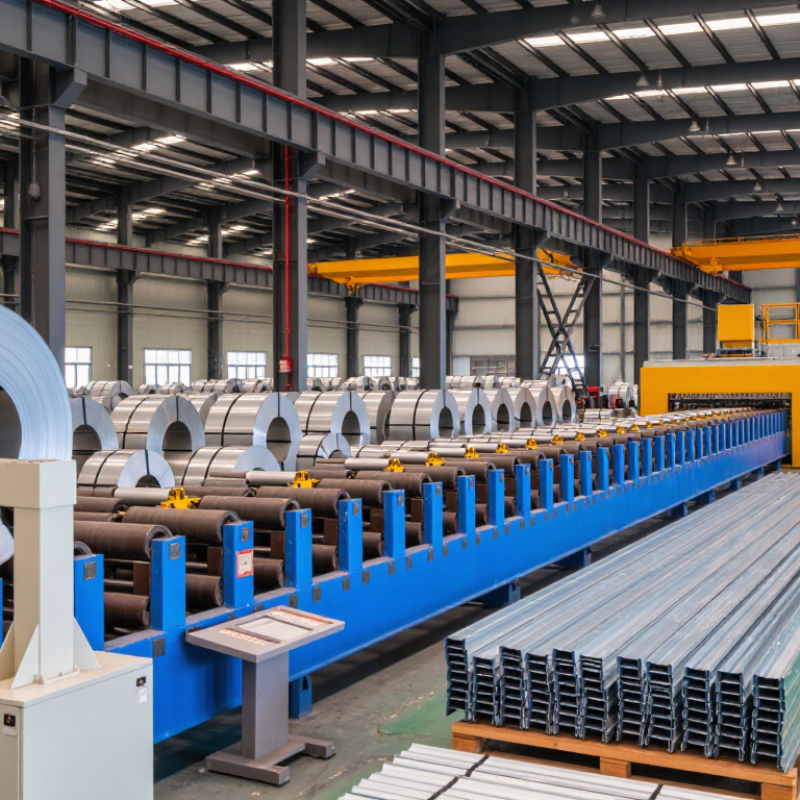
Roll forming machines turn long metal coils into consistent profiles through a sequence of contoured rollers. A decoiler feeds the strip, and leveling rollers help flatten it before forming begins. Each station bends the metal a little more. The final profile may become roofing panels, wall cladding, door frames, cable trays, or structural purlins. It is a gradual process, not a single hard press. That matters. Small changes in roller alignment can affect the profile’s dimensions, surface finish, and fit during installation.
The World Steel Association’s World Steel in Figures 2025 reports that China produced about 1,005 million tonnes of crude steel in 2024, out of roughly 1,883 million tonnes worldwide. This does not measure roll-forming output or machine demand. It does show the scale of the steel supply that supports downstream fabrication. In practice, operators choose tooling, line speed, and cut length to match the material and finished part. Thin roofing coil may run quickly; thicker structural sections need careful setup. Not quite effortless. A poorly adjusted line can mark the surface or produce profiles that drift out of tolerance, so trial runs and regular checks remain important.
| Application | Typical Product | How the Machine Shapes the Metal | Common Materials | Typical Use |
|---|---|---|---|---|
| Building roofs and walls | Roofing sheets and wall cladding panels | A continuous strip passes through successive roller stations that form ribs, waves, or other profiles. | Galvanized steel, pre-painted steel, and aluminum sheet | Industrial buildings, warehouses, workshops, and agricultural structures |
| Structural framing | C-shaped, U-shaped, and Z-shaped sections | Rolls progressively bend sheet or strip into open structural sections, often with cut-to-length operation. | Carbon steel and galvanized steel | Light-gauge steel framing, purlins, ceiling systems, and partition frameworks |
| Doors and windows | Frame members, tracks, and reinforcing sections | Multiple forming stands create consistent channels, flanges, and edges along a continuous strip. | Galvanized or coated steel; aluminum for selected profiles | Door frames, window components, sliding tracks, and building fittings |
| Transportation infrastructure | Guardrail sections and roadway barrier components | Heavy-duty roll-forming lines shape steel strip into corrugated or multi-bend profiles; holes may be punched in-line. | Structural-grade and galvanized steel | Roadside safety barriers and related infrastructure products |
| Electrical and building services | Cable trays, trunking, and support channels | Rollers form channels and folded edges; perforations or slots can be added by an integrated punching unit. | Galvanized steel, stainless steel, and aluminum | Cable routing and support systems in commercial and industrial buildings |
| Storage and logistics | Rack uprights, beams, and shelving components | Roll-forming stations create repeated bends and stiffening features; punching may produce connection holes. | High-strength and galvanized steel | Warehouse shelving, pallet racking, and storage systems |
| Metal furniture and equipment | Cabinet rails, drawer slides, and equipment frames | Rollers shape narrow strips into repeatable channels, angles, and reinforced profiles. | Cold-rolled steel, coated steel, and stainless steel | Metal cabinets, office furniture, and equipment enclosures |
| Solar mounting systems | Rails, brackets, and support channels | Continuous forming produces long, uniform sections; punching can create mounting slots or fixing holes. | Galvanized steel and aluminum | Support structures for rooftop and ground-mounted solar panels |
| General profile production | Angles, channels, edge trims, and custom sections | A series of matched rollers gradually bends flat strip into a specified cross-section without shaping the entire profile in one pass. | Steel, stainless steel, and aluminum, depending on the product and machine setup | Construction, appliances, vehicle components, and other products requiring consistent long profiles |
A decoiler feeds metal coil through entry guides and successive roller stations. Rollers bend the strip gradually. A cutter trims it to length, and operators inspect the finished profile.
Misalignment can cause uneven edges or a twisted profile. Check the guides and roller alignment before production. Small shifts matter.
Common products include roofing sheets, wall panels, purlins, cable trays, door frames, shelving rails, and guardrail sections. Each needs a suitable roller arrangement.
Run a short sample first. Measure its dimensions and inspect surface marks, edges, and fit. A sample helps, but it cannot reveal every issue.
Start with the finished profile, material, thickness range, coil width, and required dimensions. Tight tolerances may require more forming stations and careful adjustment.
No. Cutting, stacking, or packing may not keep pace with forming. Compare the whole workflow, not just the machine’s speed.
Check changeover time, floor space, power supply, and coil loading. Different profiles may need new settings. Plan for adjustments and downtime.
Record scrap, adjustment time, and output across a full shift when possible. Keep a setup sheet, but treat it as a guide; material behavior can differ.
Roll forming machines shape metal by feeding coils or sheets through a series of carefully arranged rollers. Each station gradually bends the material into a consistent profile while maintaining its length and structural properties. A typical process involves material feeding, leveling, progressive forming, cutting, and quality inspection. Machine components such as rollers, guides, drive systems, and cutting units work together to support accurate and repeatable production.
Roll Forming Machine Applications in China include the manufacture of roofing and wall panels, channels, frames, rails, and other formed metal sections. These components are used across construction, transportation, infrastructure, warehousing, and equipment manufacturing. Selecting a suitable machine depends on factors such as the required profile, material type and thickness, production volume, dimensional accuracy, available space, and automation needs. Matching these requirements helps manufacturers produce consistent parts efficiently while reducing material waste and unnecessary downtime.

 Xiongchang