Choosing a PBR Metal Roofing Machine is not a simple price comparison. It is a production decision that affects accuracy, labor, maintenance, and customer trust. Global buyers must examine the complete operating environment, not only the machine’s advertised speed.
Robert A. Sladky, a roll-forming equipment specialist, has often emphasized a practical principle: “The tooling and setup determine the quality of the finished profile.” That point matters when producing PBR panels with clean ribs, consistent sidelaps, and straight cut ends. A machine may look impressive in a showroom, yet perform poorly with unsuitable steel thickness or weak tooling control.
This guide examines the details buyers can physically verify. Check the required coil width, material range, forming stations, cutting method, motor capacity, and control-system language. Ask for sample panels made from the same steel grade you will use. Look closely at rib alignment. Measure the panel length. Listen for abnormal vibration.
Electrical standards also deserve attention. A machine designed for one voltage or frequency may require costly adaptation elsewhere. Local technicians, spare rollers, remote diagnostics, and clear manuals can prevent long production delays. These services are sometimes overlooked.
The lowest quotation can become expensive. Still, a premium machine is not automatically the right machine. Buyers should compare documented output, warranty terms, delivery support, and real installation experience. Some manufacturers provide impressive numbers without explaining production conditions. That deserves careful questioning.
The goal is dependable roofing production, not a glossy purchase. Mistakes happen. Careful verification reduces them.
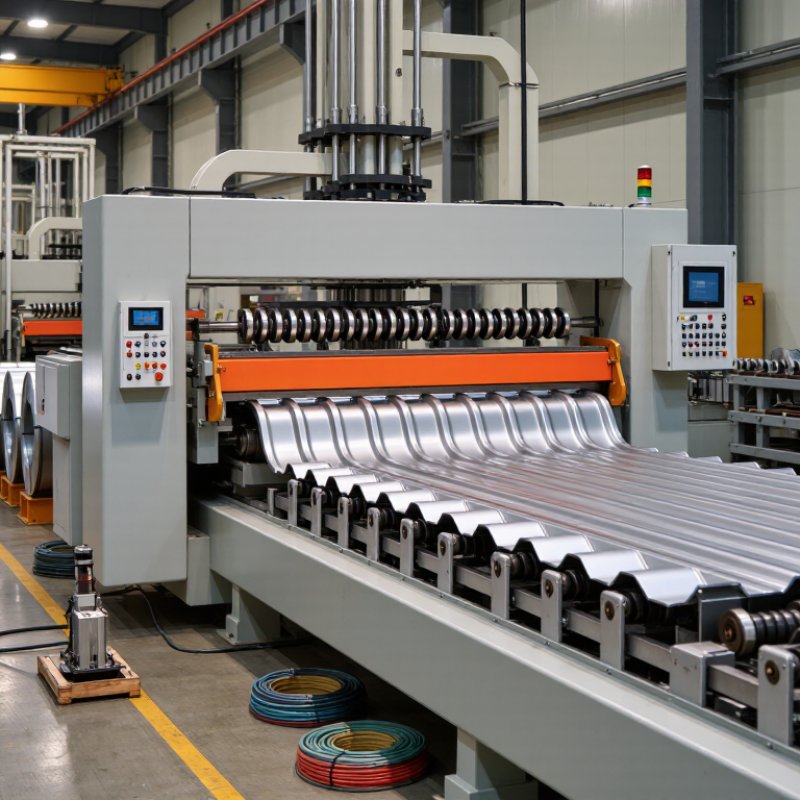
For global buyers, a PBR metal roofing machine must form the correct panel geometry, not merely produce attractive sheets. A standard PBR profile uses 1.25-inch ribs and 36-inch net coverage. That dimension controls lap alignment, structural performance, and material usage. Even a small width error can create visible gaps at the building edge. ASTM A792/A792M and ASTM A653/A653M provide relevant steel-coating and substrate requirements, but they do not replace accurate roll-forming checks.
In practical production, specify the finished coverage, rib height, coil thickness, and allowable tolerance before comparing machines. A reliable line should include adjustable entry guides, stable shaft alignment, and enough forming stations to shape the 1.25-inch rib gradually. According to the U.S. Geological Survey’s Mineral Commodity Summaries 2024, global steel production remains above 1.8 billion metric tons annually. This scale makes coil availability broad, but thickness and coating consistency still vary by region. A machine set for one supplier’s coil may need adjustment elsewhere. That detail is often underestimated.
Tips: Ask the manufacturer for a measured sample panel. Check rib height, coverage, sidelap, and cut length with calibrated tools. Request test results using your local coil grade. Do not trust drawings alone. The 36-inch label can be confusing when net coverage differs from overall sheet width. I would also inspect the first and last panels from a trial run. Small errors may appear only after several meters. A thoughtful buyer should leave room for improvement, because real production is rarely perfect.
| Data Dimension | Typical PBR Requirement | Metric Equivalent | Machine-Selection Implication |
|---|---|---|---|
| Panel type | Structural exposed-fastener PBR/PBU roofing panel | — | Select a roll former designed for trapezoidal structural roofing profiles, not only low-rib architectural panels. |
| Rib height | 1.25 in | 31.75 mm | The forming stations must produce consistent 31.75 mm ribs without excessive coating scuffing or web distortion. |
| Rib spacing | 12 in on center | 304.8 mm on center | Roll tooling should maintain the specified pitch across the full strip width and through the cut-to-length cycle. |
| Net panel coverage | 36 in | 914.4 mm | Confirm that the finished cover width is 914.4 mm after forming, rather than the incoming coil width. |
| Side-lap arrangement | One major rib overlapped at the panel joint | Profile-dependent | The roll-forming profile must match the specified lap geometry and fastener location used in the target market. |
| Common material thickness | 22, 24, 26 gauge steel | Approximately 0.76, 0.61, 0.48 mm | Choose a machine frame, shafts, bearings, and forming rolls rated for the thickest intended gauge. |
| Usable material width | Must be calculated from the approved roll tooling design | Typically greater than 914.4 mm | Do not order tooling from coverage width alone; request the exact entry width, developed width, and finished width. |
| Steel grades and coatings | Galvanized or zinc-aluminum coated structural sheet | Commonly specified under ASTM or EN standards | Verify yield strength, coating designation, paint system, and thickness range before finalizing roll materials and forming pressure. |
| Cut-to-length method | Flying or stop-and-cut shear | Length programmed in mm or ft | For higher productivity, use synchronized flying cutting; for lower output, a stop-and-cut system may be sufficient. |
| Length accuracy target | Defined by the buyer’s project specification | Often controlled in millimetres | Evaluate encoder resolution, shear clearance, PLC control, and calibration procedures rather than relying only on rated line speed. |
| Typical production speed | Application-dependent; commonly about 10–20 m/min for profiled roofing production | 10–20 m/min | Compare usable output after slowdown, cutting, recoiling, and profile inspection—not the maximum no-load speed. |
| Electrical configuration | Three-phase industrial power | Common systems include 380–415 V, 50 Hz | Specify local voltage, frequency, phase, control-panel standard, and protection requirements before shipment. |
| Quality verification | Check rib height, pitch, coverage, straightness, cut length, and coating condition | Use a calibrated steel rule, caliper, and measuring tape | Require a sample-panel inspection and documented acceptance tolerances before approving final tooling. |
How to Choose a PBR Metal Roofing Machine for Global Buyers?
Match Production Capacity: 60–100 ft/min Roll-Forming Speed
For PBR panels, a 60–100 ft/min machine suits many medium-scale production lines. Speed must match confirmed orders, not showroom claims. At 80 ft/min, an eight-hour shift could produce 38,400 linear feet. With 85% practical uptime, output falls to about 32,640 feet. This estimate includes loading, cutting, setup, and minor stoppages. Keep the math visible.
The World Steel Association reported 1.89 billion tonnes of crude steel production in 2023. Global buyers therefore need machines that handle stable coil supply and changing specifications. A higher speed helps when panel orders are large and repetitive. However, thicker steel, narrow gauges, complex ribs, and shorter cut lengths can reduce real output. The 2024 GlobalData Global Construction Outlook also highlights continuing construction activity across industrial and infrastructure markets, where dependable throughput matters.
Ask for tested speed with your actual material. Request sample panels, profile measurements, and a recorded production trial. I would not trust “100 ft/min” without these details. Our first capacity estimate may look impressive, but changeovers can expose weak planning. A 70 ft/min line with reliable feeding and accurate cutting may outperform a faster machine. Consider operator skill, service access, electrical standards, and spare-part availability in the destination country. Real capacity is never just a number.
Match production capacity with a roll-forming speed of 60–100 ft/min. The chart shows theoretical output during one continuous 8-hour shift, before accounting for setup, coil changes, maintenance, and downtime.
Calculation basis: 60–100 ft/min × 60 minutes × 8 hours. Actual production will vary according to operating efficiency, panel length, material handling, and changeover time.
When choosing a PBR metal roofing machine, verify the steel specification before comparing speed or price. ASTM A653 usually identifies galvanized steel, while ASTM A792 covers aluminum-zinc coated steel. G90 refers to the galvanized coating class, not the base steel grade. AZ50 and AZ55 describe aluminum-zinc coating weights. They are not interchangeable labels.
Check thickness, width, yield strength, and coating type against the machine’s forming range. A thicker sheet may require stronger entry guides and larger drive capacity. Harder steel can increase springback around the panel ribs. Coated surfaces also need careful roll alignment. Small scratches can expose the substrate and create later corrosion concerns. The coating is not decoration.
Request a trial run using certified material, not only a digital specification sheet. Review the mill certificate and confirm coating weight on both sides. Measure panel width, rib height, and overlap after forming. A useful test includes several panels, because the first panel can look perfect by accident. I have seen machines pass a short sample but drift during longer production. That result deserves questioning. Confirm whether the tooling suits both G90 galvanized steel and AZ50 or AZ55 material. The answer should include permitted thickness, hardness, tolerance, and maintenance requirements. If these details remain vague, the machine is not fully verified for global purchasing.
How to Choose a PBR Metal Roofing Machine for Global Buyers?
When evaluating a PBR metal roofing machine, inspect its PLC control system carefully. The PLC should coordinate the decoiler, forming rollers, encoder, and hydraulic cutter. This coordination reduces manual adjustments during continuous production. A clear touchscreen also helps operators set length, quantity, speed, and emergency stops. Keep it simple.
A claimed cutting accuracy of ±1 mm sounds impressive, but it needs evidence. Ask for a test run using your actual steel thickness and coil width. Measure several finished panels, not only one sample. Cutting accuracy depends on encoder calibration, line speed, blade condition, and correct roller alignment. Small errors grow. A clean 3-meter panel may look acceptable, while a longer panel can expose inconsistent control.
Global buyers should request production records, wiring diagrams, operating manuals, and realistic maintenance guidance. Confirm the machine matches the available power supply and workshop conditions. Spare encoders, sensors, and cutting blades should be easy to identify and replace. Remote support is useful, but it cannot fix poor commissioning. Do not assume perfection. Even a well-designed PLC system needs trained operators and periodic calibration. A supplier willing to explain limitations often appears more reliable than one offering only attractive accuracy figures.
Choosing a PBR metal roofing machine requires more than checking speed and roll-forming capacity. Audit guarding, emergency stops, electrical protection, and operator access. ISO 12100 requires systematic machinery risk assessment. Local requirements may also reference EN 60204-1 or OSHA 1910.212. Ask for test records, not promises. A clean factory floor helps, but documented procedures matter more.
Coating performance deserves equal attention. The AMPP IMPACT study estimated global corrosion costs at about 3.4% of worldwide GDP. That figure explains why substrate preparation, forming pressure, and storage conditions are critical. Request coating specifications, adhesion results, salt-spray data, and traceable material certificates. A 25–40-year coating warranty sounds strong. It may cover only defined corrosion conditions. Check film thickness, color-fade limits, exclusions, inspection duties, and claim procedures. Warranty length is not service quality.
A reliable supplier should provide installation training, manuals, remote diagnostics, and stocked wear parts. Ask how quickly technical support responds across time zones. Confirm whether service engineers understand your electrical standards and roof-panel tolerances. Review references from comparable climates. Humid coastlines expose weak protection quickly. Dry regions reveal dust and bearing problems. I would also test sample panels before signing. That step costs time. It can expose waviness, oil-canning, or unstable dimensions. One uncomfortable question remains: can the supplier still support the machine after ten years? If the answer is vague, the warranty deserves less confidence.
A 60–100 ft/min range suits many medium-scale production lines. Match speed with confirmed orders. Showroom claims are not enough.
An eight-hour shift could produce 38,400 linear feet theoretically. At 85% uptime, output may fall to about 32,640 feet. Keep the math visible.
Thicker steel, narrow gauges, complex ribs, and short panels can reduce output. Loading and changeovers also consume time. Speed alone misleads.
Request a recorded trial using your actual coil width and steel thickness. Inspect sample panels, profile measurements, and cutting results. I would not trust speed claims without evidence.
It should coordinate the decoiler, forming rollers, encoder, and hydraulic cutter. The touchscreen should control length, quantity, speed, and emergency stops. Keep it simple.
Measure several finished panels, not one sample. Test different lengths and your actual material. Encoder calibration, blade condition, and roller alignment affect accuracy.
Inspect guarding, emergency stops, electrical protection, and operator access. Request risk-assessment records and documented procedures. A clean factory floor proves little.
Check film thickness, color-fade limits, corrosion conditions, exclusions, inspections, and claim procedures. A 25–40-year warranty may cover only narrow conditions. Warranty length is not service quality.
Confirm installation training, manuals, remote diagnostics, spare parts, and response times. Check electrical compatibility and local service capability. Ask about support after ten years.
Testing can reveal waviness, oil-canning, unstable dimensions, or poor coating protection. It costs time. That discomfort may prevent expensive mistakes.
Choosing the right PBR Metal Roofing Machine requires a careful review of panel design, production goals, material compatibility, control systems, and long-term support. Start by confirming that the machine forms standard PBR panels with 1.25-inch ribs and approximately 36-inch coverage. Its roll-forming speed should match your expected output, with a practical range of 60–100 feet per minute for many production environments.
Global buyers should also verify compatibility with steel specifications such as ASTM A653, ASTM A792, G90, AZ50, and AZ55, ensuring the equipment can process the required coated materials. PLC-based automation, dependable feeding, and cutting accuracy of about ±1 mm can improve consistency and reduce material waste. Before purchasing, audit machine safety features, applicable standards, installation support, spare-parts availability, and technical service. Finally, review coating performance and warranty terms, with reliable systems often supported by 25–40-year coating warranties when properly specified and maintained.

Xiongchang