How Does a China Top Roll Forming Machine Work?

Time:2026-10-16 Author:Sienna
0%

Understanding how a roll forming machine works begins with the material entering the production line. A China-made roll forming machine usually processes steel or galvanized coils into continuous profiles. The coil passes through a decoiler, guide rollers, forming stations, and a cutting unit. Each station bends the strip slightly. The gradual process protects the surface and preserves dimensional accuracy.

But how does a roll forming machine work in real production? This article will follow the complete path, from coil loading to finished panels, channels, or roofing sheets. It will explain the role of roller design, frame construction, drive systems, hydraulic cutting, and PLC controls. Operators can see the profile develop step by step, like a flat ribbon becoming a precise structural section. Small alignment errors matter. A slight deviation at one station may become visible at the final cut.

Performance depends on more than the machine name or country of manufacture. Experienced buyers should check steel grade, coil width, thickness range, forming speed, tolerance control, and maintenance access. Reliable Chinese manufacturers normally provide drawings, trial forming, electrical documentation, and inspection records. However, “top” quality is not universal. Supplier support, installation skill, and replacement parts can change the result. That point deserves honest attention.

The guide will also address common problems, including uneven feeding, profile twisting, surface scratches, and inaccurate lengths. Practical checks will connect machine theory with workshop experience. Safety guards, emergency stops, grounding, and operator training remain essential. The goal is simple: clearly answer How Does A Roll Forming Machine Work while helping readers judge equipment with technical confidence.
How Does a China Top Roll Forming Machine Work?

Machine Structure and Core Components of a China Top Roll Forming Machine

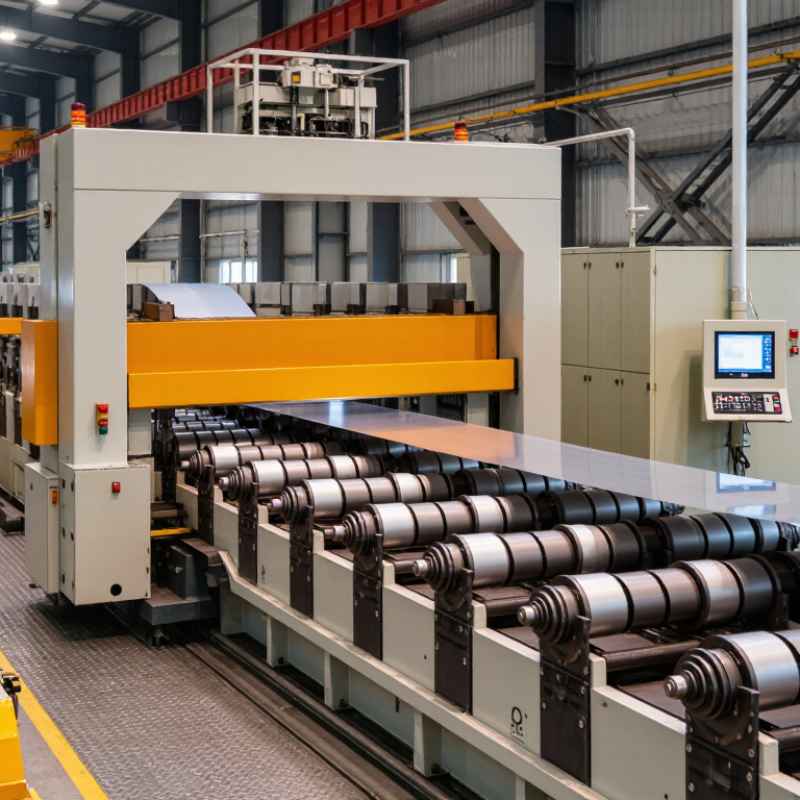
A China top roll forming machine shapes steel through a controlled sequence of rollers. Its main structure includes a welded base, entry guide, forming stations, transmission system, cutting unit, and electrical cabinet. Each station bends the strip slightly, reducing surface stress and profile distortion. The machine usually uses high-strength alloy rollers, supported by bearings and adjustable shafts. A 2024 report from the China Iron and Steel Industry Association recorded China’s crude steel output at about 1.005 billion tonnes in 2023. This large material base supports strong demand for efficient profile production.

The forming rollers are the working core. Their spacing, hardness, and alignment directly affect dimensional accuracy. The drive motor transfers torque through gears or a chain system, while the PLC controls speed, length measurement, and cutting timing. In factory inspections, uneven roller gaps often create twist marks near the profile edge. This is easy to miss. Industry research from Grand View Research estimates continued growth in the global roll forming machine market through the decade, driven by construction and automotive applications. However, published forecasts vary, so buyers should test real samples instead of trusting capacity claims alone.

Tips: Check shaft parallelism with precision gauges. Measure profile width after every few stations. Keep the decoiler, machine frame, and cutter aligned. A small setup error can become a costly length error. Operators should record coil thickness, yield strength, line speed, and finished tolerances for repeatable production.

How Metal Coils Are Prepared and Fed into the Forming Line

How Does a China Top Roll Forming Machine Work?

How Metal Coils Are Prepared and Fed into the Forming Line

A top roll forming machine made in China begins working before the coil reaches the forming stands. Coil preparation directly affects profile accuracy, surface quality, and production stability. Operators inspect the coil for rust, edge damage, uneven winding, and incorrect thickness. They also verify the material grade against the production drawing. Small mistakes here can become visible defects later.

The coil is mounted on an adjustable decoiler. Its mandrel expands inside the coil and keeps the material centered during unwinding. A brake or motor controls payoff tension, preventing sudden slack or excessive pulling. The strip then passes through a straightener, where controlled rollers remove coil memory and reduce bends. Next, guide rollers align both edges before the servo feeder moves the strip at a measured speed. Smooth feeding matters.

Before production, technicians check roller alignment, entry height, and strip width. They often run a short test length and measure the first formed section with calipers. If the coil enters slightly off-center, the profile may twist after several forming stations. A clean surface also helps prevent marks from trapped dust or metal chips.

No setup is perfect. In practice, temperature changes, coil shape, and operator adjustments can affect feeding behavior. An experienced technician watches the strip, listens for vibration, and corrects tension gradually. That judgment still matters. Even advanced controls cannot replace careful observation at the line entrance.

How Does a China Top Roll Forming Machine Work? - How Metal Coils Are Prepared and Fed into the Forming Line

Typical process data for a continuous roll forming line used to convert prepared metal coils into accurately shaped profiles.

Process Stage Main Equipment Typical Data or Range Operating Function Key Quality Considerations
1. Coil Selection Incoming material inspection area Steel thickness: 0.30–3.00 mm
Coil width: approximately 300–1,500 mm
Confirms that the coil grade, thickness, width, surface condition, and inside diameter match the profile design. Material properties must be consistent. Variations in thickness or yield strength can affect dimensional accuracy and springback.
2. Coil Loading Coil car or lifting device Coil mass: commonly 1–10 tonnes
Typical coil inside diameter: 508 or 610 mm
Positions the coil safely in line with the uncoiler mandrel before expansion and feeding. The coil should be centered to prevent lateral movement, uneven unwinding, and excessive edge stress.
3. Uncoiling Hydraulic or mechanical uncoiler Mandrel expansion: typically hydraulic
Working speed: synchronized with the forming line
Unwinds the metal strip continuously while controlling coil rotation and maintaining stable strip tension. Excessive tension may elongate the strip; insufficient tension may create loops or unstable feeding.
4. Strip Guiding Entry guide and side-positioning rollers Adjustable guide position based on strip width and profile layout Aligns the strip centerline with the forming stands and reduces sideways movement before rolling begins. Incorrect alignment can cause twisted profiles, uneven flange dimensions, and accelerated roller wear.
5. Leveling and Straightening Pre-leveler or straightening unit Usually 5–7 leveling rollers, depending on line design Reduces coil set, edge wave, and residual curvature so the strip enters the forming section in a more stable condition. Roller adjustment should be balanced. Excessive leveling pressure can mark the surface or introduce new deformation.
6. Strip Joining Shear and welding station, when continuous production is required Joining method: butt welding or manual coil-end connection Connects the end of one coil to the beginning of the next coil to reduce line stoppage during production. The welded joint should be flat, strong, and free from sharp projections that could damage forming rollers.
7. Pre-Punching or Pre-Cutting Hydraulic or mechanical punching unit Hole position controlled by encoder-based length measurement Creates holes, slots, or notches before the strip is formed when the final profile geometry makes post-forming punching difficult. Punch timing and strip tracking must be synchronized to maintain the specified hole pitch and position.
8. Roll Forming Multiple roll-forming stands Commonly 6–20 forming stands
Line speed: approximately 8–40 m/min
Gradually bends the flat strip through successive roller stations until the required cross-sectional profile is achieved. Gradual forming reduces surface damage, edge distortion, and excessive residual stress.
9. Automatic Length Measurement Encoder and programmable control system Cut-to-length accuracy: often around ±1–2 mm under stable conditions Measures the moving profile and sends the cutting command at the programmed product length. Encoder calibration, material slip, and line speed changes can influence final length accuracy.
10. Flying or Stop Cutting Hydraulic cutting system Cutting mode selected according to profile shape, thickness, and production speed Separates finished profiles at the required length after forming, either while the line is moving or during a short stop. The cutting blade must match the profile geometry and maintain a clean cut without excessive burrs or deformation.
11. Run-Out and Collection Run-out table or automatic stacking system Finished length determined by the customer’s application, commonly 2–12 m Supports, transfers, and stacks the formed products after cutting. Proper support prevents bending, scratches, edge impact, and uncontrolled accumulation at the discharge end.
12. Final Inspection Dimensional inspection tools and surface inspection area Checks profile width, height, angle, length, hole position, and surface condition Verifies that the finished product conforms to the approved drawing and production specifications. Inspection should be performed at start-up, after adjustments, and at regular intervals during continuous production.

The values shown are typical engineering ranges for continuous metal roll forming lines. Actual specifications depend on the material grade, strip thickness, profile geometry, required output, tooling design, and applicable production standards.

Step-by-Step Process of Shaping Metal Through Forming Stations

How Does a China Top Roll Forming Machine Work?

Step-by-Step Process of Shaping Metal Through Forming Stations

A roll forming machine turns a continuous metal strip into a precise profile through several forming stations. The process starts at the decoiler, which releases the coil at a controlled speed. Operators check strip width, thickness, and surface condition before production begins. A straightening unit removes coil memory and reduces unwanted bending. Small errors here can affect every later station.

Guide rollers then center the strip before shaping begins. Each forming station contains matched upper and lower rollers. These rollers apply gradual pressure, creating small bends instead of one sharp deformation. Station by station, the flat strip develops its final channels, ribs, or edges. The metal should move smoothly, without scraping sounds or visible twisting. A little noise is not always dangerous, but it deserves inspection.

At the final station, sizing rollers refine the profile and stabilize its dimensions. An automatic cutting unit separates each finished length without stopping the line. Technicians measure the first pieces with calipers and compare them with the approved drawing. If the profile is too narrow, uneven roller gaps may be responsible. Sometimes the material itself varies more than expected. That detail is easy to overlook. Regular lubrication, alignment checks, and careful setup help maintain reliable production, although no machine removes the need for skilled judgment.

How Cutting, Control Systems, and Automation Complete Production

A top roll forming machine turns coiled steel into consistent profiles through staged forming. The process begins when an uncoiler feeds strip into leveling and guide equipment. Roll stations bend the material gradually, reducing surface stress and dimensional drift. In production work, alignment matters as much as forming speed. A small guide error can appear as a large twist later.

Cutting completes each profile at a programmed length. Some systems stop the strip before cutting, while others use synchronized flying shears. An encoder measures travel, while a PLC compares movement with the target setting. The controller then adjusts forming speed, cut timing, and fault responses. Clean cuts matter. They protect installation accuracy. Operators should check blade clearance, burrs, and length tolerance during real production. Documented measurements also improve quality control.

Automation links sensors, drives, and human decisions into one operating sequence. A touchscreen can store recipes for thickness, profile, length, and batch quantity. Automatic stop functions can react to overload, material misalignment, or sensor loss. Yet automation is not perfect. Dust, loose wiring, and incorrect settings can create false confidence. Experienced technicians still inspect the first pieces and compare dimensions with drawings. That habit catches errors before a full coil becomes waste. I would also question whether maximum speed is always useful. Stable feeding often produces better output than aggressive acceleration.

How Does a China Top Roll Forming Machine Work?

Roll forming continuously feeds a steel strip through forming stations, while encoder feedback, PLC control, and an automatic cutting system coordinate the line speed and cut position. The chart shows representative production speeds commonly used for different steel thicknesses; thicker material generally requires a lower forming speed.

Key Factors Affecting Machine Performance, Accuracy, and Output

How Does a China Top Roll Forming Machine Work?

A top Chinese roll forming machine gradually bends a steel coil through matched roller stations. Each station changes the profile by a small angle. This reduces springback, edge cracking, and surface damage. The line usually includes a decoiler, guide unit, forming rolls, cutting system, and control cabinet. Its performance depends on more than motor power. Strip thickness, yield strength, coil width, and incoming flatness directly affect forming stability.

The World Steel Association reported 1.892 billion tonnes of crude steel production in 2023. That scale explains why repeatable processing matters. A small alignment error can multiply across thousands of metres. Roll spacing, shaft rigidity, bearing clearance, and roll machining accuracy control profile precision. Servo synchronization also affects cutting length and production speed. ISO 230-2 provides a useful framework for evaluating positioning accuracy, but factory conditions can still change results.

Energy use deserves attention. The International Energy Agency reported that industry consumed about 37% of global final energy in 2022. Efficient drives and properly adjusted forming loads can reduce waste.

Maintenance is less glamorous. It matters greatly. Dust, loose guides, and uneven lubrication may create ripples or dimensional drift. A claimed high speed is not always practical. Real output falls when operators slow the line for inspection, coil changes, or correction. That assumption needs testing with actual steel grades and production records.

FAQS

What does a roll forming machine do?

It changes a continuous metal strip into a precise profile through several forming stations.

What happens before the strip reaches the forming rollers?

The decoiler releases the coil at a controlled speed. Operators check width, thickness, and surface condition. A straightener reduces coil memory.

Why are guide rollers important?

Guide rollers center the strip before shaping begins. Poor alignment can cause twisting, uneven edges, or dimensional drift.

How do forming stations shape the metal?

Matched upper and lower rollers apply gradual pressure. Each station creates a small bend. Small errors spread.

What signs may indicate a forming problem?

Scraping sounds, visible twisting, ripples, or uneven edges deserve inspection. A little noise is not always dangerous. Still, investigate it.

What is the purpose of the final sizing rollers?

Sizing rollers refine the profile and stabilize its dimensions. They help produce consistent channels, ribs, or edges.

How is the finished length separated?

An automatic cutting unit separates each length without stopping the production line. Technicians measure early pieces with calipers and compare them with the drawing.

Which factors affect accuracy and output?

Strip thickness, yield strength, coil width, and flatness affect forming stability. Roll spacing, shaft rigidity, bearing clearance, and roller accuracy also matter. Motor power alone is not enough.

How can operators maintain reliable production?

Regular lubrication, alignment checks, and careful setup reduce avoidable defects. Dust and loose guides may create ripples. Maintenance matters.

Can a machine always achieve its advertised speed?

Not necessarily. Inspection, coil changes, and corrections can reduce real output. Actual steel grades and production records should test that assumption. Perfect setup is unlikely.

Conclusion

How Does A Roll Forming Machine Work? It continuously transforms metal coils into precise profiles through a sequence of forming stations. The process begins with a sturdy machine structure that supports the uncoiler, guiding system, forming rollers, cutting unit, and control panel. After the coil is loaded, it is unwound, aligned, and smoothly fed into the production line. Each set of rollers gradually bends the metal into the required shape while maintaining consistent movement and minimizing surface damage.

When the profile reaches the programmed length, an automatic cutting system separates it without interrupting production. Sensors and control systems coordinate feeding speed, roller operation, length measurement, and cutting accuracy. Automation improves productivity and reduces manual adjustments, while proper material preparation, roller alignment, machine rigidity, and regular maintenance strongly affect final quality. With suitable settings and stable operation, a roll forming line can deliver accurate, uniform products efficiently and reliably.


Sienna

Sienna

Sienna is a skilled marketing professional with a deep expertise in our company’s core products and services. With a passion for innovation and detail, she plays a pivotal role in crafting insightful blog posts that not only highlight the unique features of our offerings but also provide valuable......