The Automatic Metal Roofing Production Line represents a significant advancement in manufacturing technology. This cutting-edge system enhances efficiency and productivity in metal roofing production. Industry reports indicate that automated systems can increase output by up to 30%, decreasing labor costs substantially. According to expert Dr. Emily Tran, a leader in roofing manufacturing technology, "The right production line transforms not just operations but entire businesses."
Automation in metal roofing offers critical benefits. Increased precision and reduced material waste are paramount. A well-calibrated production line helps manufacturers maintain quality while optimizing resources. Reports suggest that up to 15% of material savings can be achieved using automated processes. However, transitioning to these systems requires careful planning and investment.
Challenges exist in integrating such technology. Not every company can afford the upfront expenses. Additionally, staff may need retraining to adapt to new equipment. Despite these hurdles, the potential for improved output and sustainability makes the Automatic Metal Roofing Production Line a valuable asset for forward-thinking manufacturers.
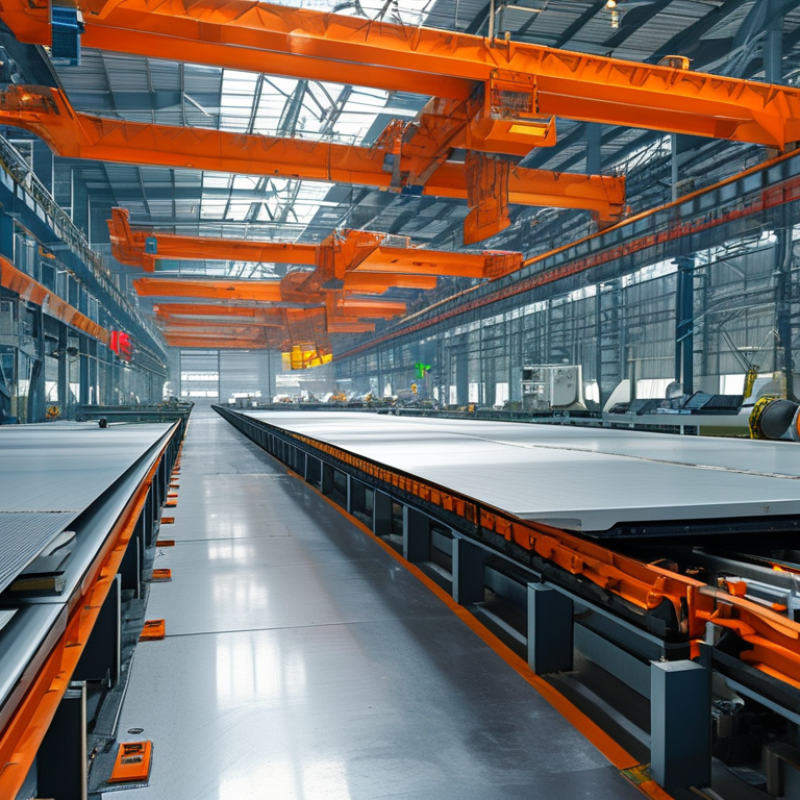
Advantages of Automation in Metal Roofing Production Lines
Automation in metal roofing production lines offers significant advantages that enhance efficiency and quality. One notable benefit is the reduction in labor costs. Reports indicate that automated systems can cut labor expenses by 30-50%, depending on the scale. This efficiency lets companies reallocate resources, focusing more on innovation and quality control. Additionally, automation minimizes human error, leading to a 20% increase in production accuracy. With more precise outputs, the durability and performance of metal roofs improve significantly.
Automation also enhances production speed. Advanced machinery can operate continuously, leading to a 40% increase in output. This means shorter project timelines and quicker turnarounds for clients. A consistent production rate ensures that businesses can meet rising demand without sacrificing quality. However, investing in automation requires a careful assessment of initial costs versus long-term benefits. Some companies may feel overwhelmed by the upfront expenses, but studies show that the return on investment typically occurs within a few years.
To maximize the benefits of automation, consider employee training and system maintenance. Knowledgeable staff can troubleshoot issues swiftly, maintaining production flow. Regular assessments of machinery can prevent costly downtimes. Understanding the technology can help staff adapt more effectively, which is vital as the industry evolves. Embracing automation might lead to initial challenges, but the potential rewards significantly outweigh these hurdles.
Increased Production Efficiency Through Automated Systems
Automated systems have revolutionized the metal roofing industry. Increased production efficiency is one of the most significant advantages of automatic metal roofing production lines. These systems minimize human error, ensuring consistent quality in each product. Faster processing times lead to quicker turnarounds, meeting customer demands promptly.
Investing in automation can yield impressive returns. With reduced labor costs, companies can allocate resources more effectively. Enhanced precision in cutting and assembling materials means less waste, leading to higher profit margins. However, it's crucial to regularly assess system performance. Over-reliance on machines may overlook crucial human insights.
Automation can also accelerate innovation. New designs and styles can be produced quickly, keeping up with market trends. Staying adaptable in a fast-paced environment is necessary for competitiveness. Regular training for staff is essential to balance technology and human skill. Evaluate your team’s adaptability as they work alongside advanced systems. This reflective approach can prevent potential setbacks while maximizing the benefits of automation.
Top 10 Benefits of Automatic Metal Roofing Production Line
Cost Reduction in Labor and Material Waste with Automation
The automation of metal roofing production lines offers numerous advantages, especially in labor cost reduction and minimized material waste. According to industry insights, manual production can incur labor costs up to 30% higher than automated systems. Automated lines operate continuously, producing more consistent metal sheets with fewer workers. This shift can lead to savings of thousands of dollars annually.
Material waste is another critical area where automation excels. A recent study highlighted that traditional methods might lead to waste rates of 15% to 20% due to human error and inefficiencies. In contrast, automated systems can reduce waste to as low as 5%. By utilizing advanced sensors and precision cutting technology, these lines ensure optimal use of raw materials. However, transitioning to automation requires upfront investment, and small manufacturers may struggle with initial costs.
While automation brings clear benefits, it’s essential to consider the learning curve. Workers need training to adapt to new systems, posing a temporary challenge. However, the long-term efficiency gains often outweigh these hurdles. Businesses must evaluate their current production methods critically and weigh these factors to harness the full potential of automation in metal roofing production.
Top 10 Benefits of Automatic Metal Roofing Production Line
| Benefit |
Description |
Impact |
| Cost Reduction |
Automation reduces labor costs by minimizing manual input. |
Up to 30% savings on labor costs. |
| Material Waste Reduction |
Automated precision ensures optimal use of materials. |
Can reduce waste by 20% or more. |
| Speed of Production |
Faster production rates compared to manual processes. |
Production can increase by 50%. |
| Consistency in Quality |
Automated processes minimize human error. |
High consistency in product quality. |
| Scalability |
Easier to scale production according to demand. |
Flexibility in meeting market demands. |
| Labor Safety |
Reduced manual labor minimizes risk of workplace injuries. |
Improved safety records. |
| Reduced Lead Times |
Faster setups and changeovers compared to manual systems. |
Lead times can decrease by up to 40%. |
| Technological Advancements |
Embracing automation keeps the business competitive. |
Enhances market reputation. |
| Optimized Workflow |
Streamlined processes improve overall efficiency. |
Overall efficiency can improve by 30%. |
| Environmental Impact |
Reduced waste and energy consumption lead to better sustainability. |
Positive environmental footprint. |
Enhancement of Product Quality and Consistency in Metal Roofing
The automatic metal roofing production line significantly enhances product quality and consistency. This technology automates many processes, reducing human error. Each roofing panel is produced with precision, ensuring uniformity in dimensions and strength. This consistency leads to better performance in real-world applications, including resistance to weather and wear.
A few details can affect the overall quality. Proper calibration of equipment is vital. Regular maintenance ensures that machinery operates at peak efficiency. For optimal results, monitor the production line frequently. This keeps everything aligned, reducing the risk of defects. A small oversight can lead to larger issues down the line.
It’s also crucial to train staff on the latest technology. Understanding how each part of the system works allows for quick troubleshooting. Mistakes in handling can impact production quality. Regular workshops might be necessary to instill best practices. Finding ways to improve processes continuously can lead to better product outcomes.
Real-Time Monitoring and Data Analysis for Improved Operations
Real-time monitoring and data analysis are transforming the metal roofing production industry. Automated systems now allow manufacturers to gather and analyze production data continuously. According to recent industry reports, real-time data can improve operational efficiency by up to 25%. This enhancement is drawn from timely adjustments in production lines, which can reduce waste and optimize material use.
Data analysis helps identify bottlenecks in production systems. By employing predictive analytics, manufacturers can foresee potential issues before they escalate. With these insights, proactive measures can be taken to maintain workflow, which can yield a significant reduction in downtime. Industry studies indicate that manufacturers using advanced data analysis can reduce maintenance costs by as much as 30%.
However, reliance on technology comes with challenges. Data accuracy is crucial. An error in real-time monitoring systems can lead to costly production mistakes. Additionally, not all workforce members may be equipped with the skills to interpret complex data effectively. A balance between human insight and technological power is essential for achieving the best results.
Sustainability Benefits of Automated Metal Roofing Manufacturing
The sustainability benefits of automated metal roofing manufacturing are becoming increasingly vital in today’s manufacturing landscape. Automated production lines help reduce waste, which is crucial for environmental conservation. Metal roofing systems are typically durable and recyclable. Automated processes ensure that materials are cut and shaped with precision, minimizing excess. This approach often results in a smaller carbon footprint during production.
New technologies like AI and machine learning are enhancing efficiency and accuracy. These advancements optimize resource usage, ensuring that materials are only used as needed. Furthermore, automated systems can alert operators to maintenance needs, reducing downtime. However, this reliance on technology can create a reliance on consistent power sources. What happens during an outage? This vulnerability must be addressed.
Adopting automation can be a double-edged sword. While it enhances productivity, employee training is essential. Skilled workers are needed to operate and maintain these systems. If training is insufficient, costly errors may occur. Continuous improvement in staff skill sets is essential in this rapidly evolving industry. Balancing automation with human expertise is key to truly harnessing sustainability benefits.
FAQS
: Automation can reduce labor costs by 30-50%, allowing for better resource allocation.
Automation minimizes human error, increasing production accuracy by 20%.
Yes, automated systems can lead to a 40% increase in output, shortening project timelines.
They should assess initial costs against long-term benefits and potential returns on investment.
Knowledgeable staff can troubleshoot swiftly, maintaining production flow and adapting to technology.
Regular maintenance prevents costly downtimes and ensures optimal operational efficiency.
Initial challenges can occur, such as adjusting to new technology and balancing human insights.
It significantly reduces human error, ensuring uniformity in dimensions and strength.
Proper calibration and regular monitoring are critical to prevent defects and ensure optimal outcomes.
Regular workshops can help staff stay updated and promote best practices for quality enhancement.
Conclusion
The "Automatic Metal Roofing Production Line" offers a myriad of advantages that significantly enhance the manufacturing process. With the implementation of automated systems, production efficiency sees a remarkable boost, enabling manufacturers to meet increasing demand without sacrificing quality. This automation not only streamlines operations but also reduces labor costs and minimizes material waste, leading to overall cost savings.
Furthermore, the consistency and quality of the metal roofing products are greatly enhanced through automation, ensuring that every unit meets high standards. Real-time monitoring and data analysis facilitate improved operational decision-making, allowing manufacturers to swiftly adapt to changing conditions. Lastly, automatic systems contribute to sustainability, as they optimize resource usage and minimize environmental impact. Overall, the transition to an Automatic Metal Roofing Production Line stands to benefit manufacturers through enhanced efficiency, quality, and sustainability.

 Xiongchang